Monday, 12 December 2016

The Torah and Injeel according to the Qur'an

In this article I will be discussing what the Qur'an says about the previous divine scriptures and which books Allah considers to be divinely-revealed scripture, how god enjoins the Jews and Christians to follow these scriptures and how he tells them to believe in the Qur'an as a continuation of divine revelation. I will discuss each of these scriptures in turn and explain how Allah is mistaken about these books, does not know their origins or the contents of these books in any detail and how he requests the impossible from Jews and Christians - namely to follow the books revealed to Moses and Jesus - things an all-knowing god would not do.

First, I will explain what the Qur'an says and what Muslims are obliged to believe. Muslims believe the Qur'an to be the final written revelation from god, sent as a guidance to all humanity. About the Qur'an, Allah says:
[12:2] Surely We have revealed it-- an Arabic Quran-- that you may understand.
[12:3] We narrate to you the best of narratives, by Our revealing to you this Quran, though before this you were certainly one of those who did not know.
And Allah also tells us that he revealed previous scriptures before this Qur'an:
[3:3] He has revealed to you the Book (Qur'an) with truth, verifying that which is before it, and He revealed the Taurat (Torah) and the Injeel (Gospel) aforetime, a guidance for the people...
[17:55] ...and certainly We have made some of the prophets to excel others, and to Dawood (David) We gave a scripture (Zaboor - Psalms).
[87:18 - 19] Most surely [these doctrines of Islam are] in the earlier scriptures, the scriptures of Ibrahim (Abraham) and Musa (Moses).
So we can confirm that Allah claims his divinely authored revelations include, in chronological order:
  1. The scriptures of Abraham (Suhufi Ibrahim)
  2. The scriptures of Moses - the Torah (Taurat)
  3. The book of David - the Psalms (Zaboor)
  4. The book of Jesus - the Gospel (Injeel)
  5. The book of Muhammed - the Qur'an
Then Allah mentions two things about the scriptures before the Qur'an. Firstly, he says that these books are a guidance and should be followed by Jews and Christians, and indeed he requires Muslims to recognise these books as divine revelation.
[4:47] O you who have been given the Book (Jews and Christians)! believe that which We have revealed (the Qur'an), verifying what you have (the Jewish/Christians books)...
[5:44] Surely We revealed the Taurat in which was guidance and light; with it the prophets who submitted themselves (to Allah) judged (matters) for those who were Jews, and the masters of Divine knowledge and the doctors, because they were required to guard (part) of the Book of Allah, and they were witnesses thereof;...
[5:46] And We sent after them [the prophets] in their footsteps Isa, son of Marium, verifying what was before him of the Taurat and We gave him the Injeel in which was guidance and light, and verifying what was before it of Taurat and a guidance and an admonition for those who guard (against evil).
[5:47] And the followers of the Injeel should have judged by what Allah revealed in it; and whoever did not judge by what Allah revealed, those are they that are the transgressors.
[5:48] And We have revealed to you the Book (Qur'an) with the truth, verifying what is before it of the Book and a guardian over it, therefore judge between them by what Allah has revealed, and do not follow their low desires (to turn away) from the truth that has come to you;...
[2:136] Say (O Muslims): We believe in Allah and (in) that which had been revealed to us, and (in) that which was revealed to Ibrahim and Ismail (Ishmael) and Ishaq (Isaac) and Yaqoub (Jacob) and the tribes, and (in) that which was given to Musa (Moses) and Isa (Jesus), and (in) that which was given to the prophets from their Lord, we do not make any distinction between any of them, and to Him do we submit.

But then, he also says that these books were altered, essentially corrupted and that parts have been changed, words have been altered, moved and/or hidden.
[4:46] Of those who are Jews (there are those who) alter words from their places and say: We have heard and we disobey...
[5:13] But on account of their breaking their covenant We cursed them and made their hearts hard; they altered the words from their places and they neglected a portion of what they were reminded of; and you shall always discover treachery in them excepting a few of them; so pardon them and turn away; surely Allah loves those who do good (to others).
[5:14] And with those who say, We are Christians, We made a covenant, but they neglected a portion of what they were reminded of, therefore We excited among them enmity and hatred to the day of resurrection; and Allah will inform them of what they did.
[5:15] O followers of the Book! indeed Our Apostle [Muhammed] has come to you making clear to you much of what you concealed of the Book and passing over much; indeed, there has come to you light and a clear Book from Allah;
[5:68] Say: O followers of the Book! you follow no good till you keep up the Taurat and the Injeel and that which is revealed to you from your Lord; and surely that which has been revealed to you from your Lord shall make many of them increase in inordinacy and unbelief; grieve not therefore for the unbelieving people.
[5:69] Surely those who believe and those who are Jews and the Sabians and the Christians whoever believes in Allah and the last day and does good-- they shall have no fear nor shall they grieve.
And after telling them to follow the old scriptures, Allah then requests them to follow the Qur'an and establishes the superiority of the Qur'an over the older scriptures by telling devout Jews and Christians, who believe that their books are perfect, that their books have been corrupted while the Qur'an is perfect, free from discrepancies and cannot be forged.
[5:19] O followers of the Book (Jews and Christians)! indeed Our Apostle [Muhammed] has come to you explaining to you after a cessation of the (mission of the) apostles, lest you say: There came not to us a giver of good news or a warner, so indeed there has come to you a giver of good news and a warner; and Allah has power over all things.
[16:89] ...and We have revealed the Book (Qu'ran) to you explaining clearly everything, and a guidance and mercy and good news for those who submit.
[4:82] Do they not then meditate on the Quran? And if it were from any other than Allah, they would have found in it many a discrepancy.
[2:2] This Book, there is no doubt in it, is a guide to those who guard (against evil).
[11:13] Or, do they say: He has forged it. Say: Then bring ten forged chapters like it and call upon whom you can besides Allah, if you are truthful.
There are a number of problems with this message that the Qur'an puts forward. If you understand these issues you will have clear proof that the Qur'an is not a divine revelation and is not the word of god, because god cannot be ignorant of the past, should not make mistakes and must be truthful. The problems that arise will be discussed in brief detail and include:
  1. The Missing Scriptures of Abraham
  2. The Torah as a Divine Book
  3. The Missing Injeel of Jesus
1. The Missing Scriptures of Abraham

What we know about the person of Abraham is primarily from the Old Testament. Islamic sources that talk about Abraham are based on narrated stories and the Qur'an. Stories mainly recount his youth and tell us that his birth was hidden because a king of the time was told that a prophet would be born to replace him so he ordered all new born boys to be killed. The Qur'an [37:83+] tells us that as a youth he recognised god by looking at the stars, sun and moon and determining that they were created by a god through deductive reasoning, and god was so impressed he befriended him. Later, Abraham destroyed the idols of his town, leaving an axe in the chief idol, making him complicit in the crime, and then was rescued by god from execution by fire. No such stories about an evil king, Abraham destroying idols or being rescued from the fire are found in the biblical account.

In fact, very little if anything is mentioned about Abraham's youth in the bible and if the Torah was revealed by god then it would surely have contained stories from his early years to confirm the stories found in the Qur'an and other Islamic literature, yet it does not. It is strange how the god of the Qur'an, who we have established above also revealed the Torah, was unable to ensure these stories remained in the Torah, if they were ever in the Torah. Did those deceitful Jews [5:13] purposely miss those parts out? Or, perhaps they never were part of the original revelation for a reason known only to god?

The biblical account paints Abraham as a secluded old man who travels with his wife Sarah and her slave girl Hagar. The biblical account is somewhat brief. And we see him briefly crossing paths with his cousin Lot and negotiating with God before the eventual destruction of Sodom and Gomorrah. Both the biblical and quranic accounts tell how Sarah could not have a child so gave her slave girl to Abraham so he could have a son. The Islamic and Biblical accounts tell of Sarah's jealousy leading to Hagar being abandoned by Abraham in the Arabian desert to die with Ishmael - one of God's tests. Then the Qur'an retells the story of the bible - of God testing Abraham again by making him attempt to murder his only begotten son (accounts of which son differ). And then we are told that god changes his mind after all regarding Sarah and allows her to become pregnant and give birth to Isaac. The Qur'an tells us that Abraham built the Kaabah with his son Ishmael and it tells us that Abraham had scriptures revealed to him.

No mention of any scriptures of Abraham are mentioned in the Torah. Moreover, there is no mention of any scriptures being revealed to Abraham in the whole bible - Old and New Testament. One wonders why and how such an important scripture or knowledge of this scripture would be excised entirely from the Torah and the rest of the bible? We know that the Jews did not have such a book during the life of the prophet Muhammed or before because there is no mention of it anywhere. It is only the Qur'an that mentions it, oddly, and it's existence or non-existence is clearly of no consequence whatsoever, except that Muslims are obliged to believe it existed.

However, it does not make sense to believe in this missing book of Abraham because one can argue - why does god go to all the trouble of revealing a holy scripture in scriptural form, painstakingly written on parchment no doubt, and allow it to disappear entirely from existence leaving no trace, neither physical nor allegorical, behind? And then its existence would not be acknowledged in the divine scriptures after it - the Torah, Zaboor and Injeel - but only come up in the Qur'an? What, did the Jews and Christians also remove its mention from their books or did god deem it unimportant so didn't bother mentioning it in those later scriptures? And now, all of a sudden, it is mentioned in the Qur'an - but are we able to see, read or hear it? No? Then what was the point of it or of bringing it up? To which people was this supposed scripture revealed at the hands of the solitary nomad Abraham? And what purpose or significance does it serve to have it revealed as a scripture and then disappear into thin air later on? Why would god waste everyone's time? It really makes no sense.

2. The Torah as a Divine Book

According to the Qur'an [7:141+], the Torah was said to be divinely revealed by god after the Jews returned from the wilderness after 40 years of wandering and before the dietary laws were revealed [3:93]. It is not entirely clear when these revelations were sent according to the Qur'an but the Torah itself relates a series of events spanning 40 or more years of intermittent revelation. By then, Moses has already climbed up mount Sinai numerous times to receive several revelations and instructions as well as the "10 Commandments" tablets, but towards the end of his life he is finally given a complete book - the Torah. It is said the words were written on parchment by Moses himself.

That is the religious understanding of how the Torah was revealed to the Jews. The reality is much more complex and assuredly does not point to a glorious divine revelation. The Torah, also known as the Pentateuch or first five books of the Old Testament (Genesis, Exodus, Leviticus, Numbers and Duetronomy), contain numeric errors, mythological stories containing creation myths, great flood myths, giants, Jacob wrestling with god, prophets doing many immoral things like offering their daughters up for rape and getting drunk and having sex with them, people living for hundred of years, nudity, sexism, injustice, cursing, war, murder, genocide, rape, looting, slavery etc., that are sufficient proof that it could not be a divine revelation. Furthermore, after reading the book myself I was thoroughly shocked by how it portrays god so much so that I would have to agree with Richard Dawkins when he says:
"The God of the Old Testament is arguably the most unpleasant character in all fiction: jealous and proud of it; a petty, unjust, unforgiving control-freak; a vindictive, bloodthirsty ethnic cleanser; a misogynistic, homophobic, racist, infanticidal, genocidal, filicidal, pestilential, megalomaniacal, sadomasochistic, capriciously malevolent bully." [The God Delusion by Richard Dawkins]

The language of the book is inconsistent and the text flows differently in different parts, as if it had multiple different authors. Words are used inconsistently indicating authors preferences for some words. Some parts are also repeated twice and there are inconsistencies between the versions, indicating that two different narratives have been combined into the book. Then there are clear influences in the stories of the Torah from other societies and legends present in the region at the time, so much so that some quotes are lifted word for word (see Noah's Ark blog post). And there are also clear numeric and continuity problems.

It comes as no surprise that modern-day researchers have held the divine authorship of the Torah to be highly doubtful or outright laughable. Most agree that the book was authored around 950-500BC based on earlier written and oral traditions around the time the Jews were exiled ending up in Babylon, Iraq. It reached its stable form nearer to 200BC. Many modern scholars believe it originated from four independent narratives edited by multiple authors over time. The prominent idea, Documentary Hypothesis, tries to explain how the book came to be via redactors and four sources: Yahwist, Elohist, Duetronomist and Priestly. Other ideas that build on this hypothesis are the Supplementary Hypothesis and Fragmentary Hypothesis. In none of these hypotheses is there any indication of the divine nature of the text as being the absolute word of god revealed to Moses. Instead it was a process of transcribing narrated stories resulting in a text full of repetition, numerical and continuity errors and differences in language and vocabulary. It is not a simple case of saying the book of Moses was "corrupted" as Muslims often repeat with ignorance. No, what Muslims have to understand is that it is an entirely different book!

It is clear that when Allah says in the Qur'an: [3:3] "He has revealed to you the Book (Qur'an) with truth, verifying that which is before it, and He revealed the Taurat (Torah) and the Injeel (Gospel) aforetime, a guidance for the people", then clearly he has no idea about the origin, contents of the book or what kind of 'guidance' the Torah contains. Allah also says: [5:13] "they [Jews] altered the words from their places and they neglected a portion", indicating he thinks the book they have is the same book supposedly revealed to Moses and all that has happened to it is that the Jews changed a few words and ignored some things in it. Allah even enjoins the Jews at the time of Muhammed to follow the book, saying: [5:68] "you follow no good till you keep up the Taurat". It is evident that Allah and his prophet had no idea about the contents of the book otherwise they would have been outraged by its depiction of god and his prophets. Instead we find Muhammed revering the Torah that the Jews at his time used:
"[Muhammed] placed the Torah on [a pillow] saying: I believed in thee and in Him Who revealed thee." [Hadith 38:4434, Sunan Abu Dawood]
And if Allah were god and knew the past and the future and everything, then he would have surely known that the Torah in the hands of the Jews was not the same book he supposedly revealed to Moses. Instead, we find Allah repeating the same mythical stories as they might be told by Jewish parents to their children in the Qur'an with the occasional quote (e.g. 5:45), but it is evident there isn't an in-depth understanding or knowledge of what the Torah actual says. I plan to explain some of the differences between Judaism and Islam and their holy books that further demonstrates this disparity between what the Torah says and what Allah thinks it says.

3. The Missing Injeel of Jesus

In verse [5:46] of the Qur'an Allah says: "We gave him [Jesus] the Injeel in which was guidance and light, and verifying what was before it of Taurat". In verse [3:3] it mentions it again with the Torah in the same sentence as being a revelation sent by god as a guidance for the people. It is then quite clear that the Injeel is a written scripture revealed to Christ. And Allah enjoins the Christians to follow the book and enjoin its teachings [5:68] and during the time of Muhammed he tells them to judge by its laws [5:46] "and whoever did not judge by [the Injeel] which Allah revealed, those are they that are the transgressors". So it is clear that Allah fully recognises the Gospel and acknowledges that the book in the hands of the Christians at the time of the prophet Muhammed is the Injeel.

And here lies the problem - the book that is in the hands of the Christians at the time of Muhammed is the New Testament and NOT the gospel of Christ. The New Testament consists of some 27 very different texts written between 50 and 150 years after the birth of Christ and by the second century the four gospels of the New Testament had been established in all cannons of every church from then until now, and they are:
  1. The Gospel According to (Apostle) Matthew
  2. The Gospel According to (Evangelist) Mark
  3. The Gospel According to (Evangelist) Luke
  4. The Gospel According to (Apostle) John
As you can see, there is no gospel of Jesus and none of those books were written during his lifetime. These books are accounts of Jesus' life and two of these gospels are not even ascribed to his apostles. The stories in the books differ, start at different times, have logical and continuity errors, and are inconsistent. According to Christians they are the divine inspiration sent by god to the Apostles and Evangelists Matthew, Mark, Luke and John and as such they accept them as the core part of their holy book. There is no claim by Christians that Jesus wrote any of these books during his lifetime nor that a scripture was revealed to Christ during his lifetime. There is no "Gospel of Christ" mentioned anywhere in Christian belief!

So when the author of the Qur'an repeatedly says that the Injeel (Evangel/Gospel) was revealed to Christ as a guidance to the people, we are left wondering what book he is talking about and to which people? Allah clearly seems to think that the book in the hands of the Christians during the lifetime of Muhammed is the Injeel and orders them to live by it and enjoin its laws. But clearly, they do not have the Injeel and they must have thought Muhammed was telling them to follow the New Testament and I imagine they must have been happy he recognised their texts when, in fact, Muhammed and his god were mistaken about the identity of the book of the Christians. Clearly Allah and his prophet never read the books.

If Muslims go by what the Qur'an says is the Injeel - the word of god revealed to Christ and written down as scripture - then they must conclude that it was lost through the passage of time. It just disappeared! And if they do hold this view, then I can raise the same criticisms as the ones I made for the "Scriptures of Abraham". What is the point of revealing a scripture to believers in the new religion of Christianity and then suddenly having it disappear? How come no-one has ever heard of this scripture and it is not mentioned in any other books - how can it just disappear without a trace? To which people was it sent as guidance and why was this guidance later retracted? Why would god go to the time and effort to reveal a divine book and then have it disappear? Why does god waste everyone's time again and only mention the existence of this book in the Qur'an. And when he mentions it in the Qur'an why does he confuse it with the New Testament?

Conclusion

I have talked about the non-existing "Scriptures of Abraham" (Suhufi Ibrahim) and explained how they have no significance or purpose - only a passing reference in the Qur'an. I have talked about the Torah and how it cannot be the word of god as revealed to Moses but some far later conglomeration of Hebrew mythology. And I have talked about the Injeel, the missing Gospel of Christ, that Allah confused with the New Testament. I didn't mention the Zaboor, the Psalms of David, because to me and to the Jews it is just part of the Old Testament cannon and did not bring a new religion with it.

From what you have just read, you can see that Muhammed and his god have no idea of when these "holy" books were written, how they were collected together and by whome, and no knowledge of the text of any of them. It is evident Muhammed heard a few stories and quotes from the Jews and Christians and included some of these in the Qur'an as a means by which to attract them to his new religion, Islam. By portraying Islam as a religion that is accepting of Christianity and Judaism, accepting of the holy books of the Christians and Jews and claiming the Qur'an was revealed by the same god, Islam found a way to emotionally manipulate the ignorant and illiterate/unread followers of Judaism and Christianity into joining it. And the deception worked! Many people embraced Islam out of ignorance. If the Jews and Christians had actually read their books, understood their history and theology, they would never have accepted Islam. There is a clear contradiction between the three religions.

If Muslims actually read the old scriptures and think about what the Qur'an claims they say, they would not call the old texts "corrupted". Not because these books aren't corrupted, but because the word "corrupted" doesn't mean the same thing when you do not recognise these books as divine revelation and reject the idea that the Qur'an is a perfect divine revelation. I read the Old Testament when I was younger but was left with a nagging feeling in the back of my head for a long time after that because I subconsciously felt something was not right. Later on in life, when I looked again at the Torah, biblical history and the Qur'an again in more detail, I immediately recognised the disparity between the Islamic understanding of religion and the Jewish understanding. And the disparity between Islamic historical stories and established historical fact. I saw the contradictions of the Qur'an and the mistakes and manipulations of its author. It became obvious to me that had the author of the Qur'an been God himself, he would know everything about the Torah, Old Testament and the New Testament and what happened in their past during their collection and editing, and also what modern scholars would know about them in the future. If the author of the Qur'an was God, He would not have been confused nor would he have made mistakes about the nature of these books. In this article I have presented just a glimpse of this disparity and contradictions of the Qur'an and I hope you have begun to see it clearly now.

Links for further reading and study:
The Old Testament
Mosaic Authorship
Documentary Hypothesis
Development of the Hebrew Bible Cannon
The New Testament
Development of the New Testament Cannon

Thursday, 13 October 2016

Noah's Ark - Safeenat Nuh

The story of prophet Noah is very well known and is taught to Jewish, Christian and Muslim children from a very young age. They produce bright and colourful books with nice drawings of lions, giraffes, zebras, ostriches and various other zoo animals. And there is the drawing of a large wooden ark and aboard it stands Noah with his staff surrounded by his sons, daughters and wives. The story is fun and exciting and encourages the imagination of young minds and for many children it is their first introduction to various exotic animals. The version of the story we got told as kids stuck with us well into adulthood and formed a sugar-coated basis for the version depicted in scriptures.

Were it not for being taught such a simple and impressive story from a young age, and the fact that there is little or no detail about the story while I was growing up, I didn't even consider it for a very long time. In retrospect, if I were to come up with an excuse as to why I believed it, I would argue that I didn't even think to question the story because I just assumed its correctness and enjoyed it as a young child. I was struck with awe as a child at the magnificence of god and how amazing he was to rescue Noah and all the animals. Then as I got older there was nothing to bring me to question the subject. I just thought: "This is quite possible through miracles and god is capable of doing anything", and carried on believing in it. It's not until you look into a subject more deeply and with a grain of scepticism do things become clear. One issue would have led to another and another until the whole story would have unravelled. I now realise the amount of things that are wrong with the whole Noah story is quite profound!

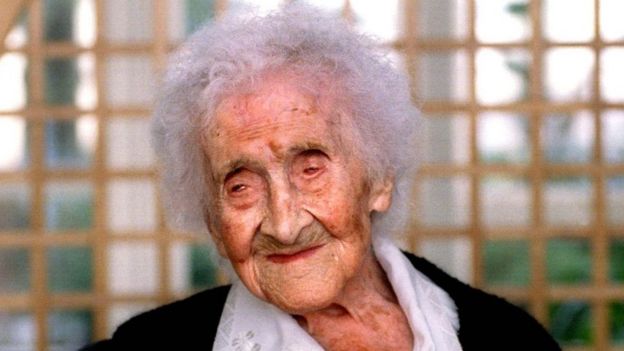
The story related in the Old Testament of the Bible, in the book of Genesis (Gen. 5 - 9), starts by telling us about Noah, who at the ripe old age of 500 years had three sons and was commanded by God one day, randomly, to build an ark (ship), exclaiming that he "saw how great the wickedness of the human race had become on the earth, and that every inclination of the thoughts of the human heart was only evil all the time" and that he "regretted that he had made human beings on the earth, and his heart was deeply troubled." How any Christian or Jew can read these verses without some kind of doubt or tribulation is beyond me! They have to excuse the claim that someone lived 500 years and had children at that age while now you look at a 70 year old man and they're practically falling apart, diseased and suffering from dementia. The photo to the right is of Jeanne Calment 1 who is officially proven to have lived to the very ripe old age of 122. Just look at that photo! Look at it and think how anyone could possibly live to anything older and still be able to do anything!
Jeanne Calment lived to be 122

Then we are told this man only began to have children at the age of 500, while for the past ~480 years was not successful in becoming a father? Also, what was he doing all those years in his life and how had he not accidentally disabled, maimed or killed himself or been killed or injured by some disease, animal, accident or person? Then God suddenly turns up and tells him: "build a boat!"; Yes, instead of finding a young man he finds a 500 year-old and tells him to build a boat. Also, god is not telling someone who lives near the sea and is a skilled craftsman to build a boat, no, he's telling Noah the farmer (Gen. 9:20) from central Iraq, a land-locked nation, to build a boat even though he would not know the first thing about boats. Then god is presented as a being who had no knowledge of what would happen in the future after having created man and that he is regretful that he made humans, meaning he made a mistake. He tells us they all became evil, even the little children and the old and infirm, meaning he had no control or influence on how they would turn out. So this tells me Jews and Christians believe in a god who is (a) not omniscient, (b) not infallible, and (c) not omnipotent. All the people he had supposedly created were deemed evil and deserved to die, except Noah and his family who, conveniently, had somehow managed to evade that noxious factor that made everyone turn into a devil.

Anyway, the story in the Old Testament goes on:
"So God said to Noah, “I am going to put an end to all people, for the earth is filled with violence because of them. I am surely going to destroy both them and the earth. So make yourself an ark of cypress wood; make rooms in it and coat it with pitch inside and out. This is how you are to build it: The ark is to be three hundred cubits long, fifty cubits wide and thirty cubits high. Make a roof for it, leaving below the roof an opening one cubit (0.45m) high all around. Put a door in the side of the ark and make lower, middle and upper decks. I am going to bring floodwaters on the earth to destroy all life under the heavens, every creature that has the breath of life in it. Everything on earth will perish. But I will establish my covenant with you, and you will enter the ark - you and your sons and your wife and your sons’ wives with you. You are to bring into the ark two of all living creatures, male and female, to keep them alive with you. Two of every kind of bird, of every kind of animal and of every kind of creature that moves along the ground will come to you to be kept alive. You are to take every kind of food that is to be eaten and store it away as food for you and for them." [The Old Testament, Genesis 6]

So Noah built the boat. It took him nearly 100 years to complete it because he was 600 years old when it was finished according to the bible! Talk about inefficiency! He loaded up all the whole earth's land-dwelling animals and the foods they eat, his family and the food they eat and then "all the springs of the great deep burst forth, and the floodgates of the heavens were opened. And rain fell on the earth forty days and forty nights.", completely flooding the planet... or so we assume, because the bible say that the levels only reached 15 cubits (6.75m=15*0.45) (Gen. 7:20). It then says all land-dwelling creatures perished in the flood and the mountain tops were covered. I don't know how these two things are reconcilable. Genesis 8 goes into more detail about what happened and when. Here's what a transcript might look like if Noah kept a log book:
  • (17/02) Rain starts. People try to clamber onto my ship but I set the lions on them.
  • (28/03) 40 days later, the rain stops. Hooray! But still can't leave the boat.
  • (17/07) 150 days after it started raining, the water levels have receded sufficiently that the ark stops on mount Ararat's peak. Still can't leave the ship though :-(.
  • (01/10) Other mountains become visible (7.5 months have passed so far and god has still not said anything to me).
  • (10/11) Since god isn't speaking to me, I sent out a couple of birds to check for dry land. Negative result and I may have sadly caused the extinction of a few species :'-(.
  • (17/11) I repeated the same experiment seven days later and dove #2 came back with a fresh fig branch. Success!
  • (24/11) The birds have stop returning. Not sure if everything is OK but assume they found dry land.
  • (01/01) It's been 10.5 months on this ark and today is my 601st birthday. Time to take the waterproofing off the ship and let everyone off the ark. It's dry enough now! Best... birthday... ever! Only family members have been invited to the party, of course.
  • (27/02) God smelled the roast I had burnt in offering to him on an alter and came back and started drying off the earth properly but he says it will take him a month. Earth has been flooded for 375 days in total!
Then God made this promise:
"I establish my covenant with you: Never again will all life be destroyed by the waters of a flood; never again will there be a flood to destroy the earth... I have set my rainbow in the clouds, and it will be the sign of the covenant between me and the earth." [Genesis 9]

Once again god is shown to not be all-powerful because he can't instantly dry the earth and this is how the story ends. There's a bit more about Noah getting drunk, naked and angry at his sons and cursing one of his children and his entire progeny and then Noah dies at the age of 950!

A Muslim reading this will surely trump up and say: "We don't believe this story that is offensive against the nature of God and his holy prophet! The bible is corrupted and imperfect, unlike the Qur'an!", and they would go on to relate some verses from the chapter named 'Nuh' (Noah):
[71.21] Nuh said: My Lord! surely they have disobeyed me and followed him whose wealth and children have added to him nothing but loss.
[71.22] And they have planned a very great plan.
[71.23] And they say: By no means leave your gods, nor leave Wadd, nor Suwa; nor Yaghus, and Yauq and Nasr.
[71.24] And indeed they have led astray many, and do not increase the unjust in aught but error.
[71.25] Because of their wrongs they were drowned, then made to enter fire, so they did not find any helpers besides Allah.
[71.26] And Nuh said: My Lord! leave not upon the land any dweller from among the unbelievers:
[71.27] For surely if Thou leave them they will lead astray Thy servants, and will not beget any but immoral, ungrateful (children).

And they would go on to relate more verses, because the story of Noah is repeated over and over again in the Qur'an that there is an abundance of verses dedicated to him:
[7.64] But they called him a liar, so We delivered him and those with him in the ark, and We drowned those who rejected Our communications; surely they were a blind people.
[11.36] And it was revealed to Nuh: That none of your people will believe except those who have already believed, therefore do not grieve at what they do:
[11.37] And make the ark before Our eyes and (according to) Our revelation, and do not speak to Me in respect of those who are unjust; surely they shall be drowned.
[11.38] And he began to make the ark; and whenever the chiefs from among his people passed by him they laughed at him. He said: If you laugh at us, surely we too laugh at you as you laugh (at us).
[11.39] So shall you know who it is on whom will come a chastisement which will disgrace him, and on whom will lasting chastisement come down.
[11.40] Until when Our command came and water came forth from the valley, We said: Carry in it two of all things, a pair, and your own family-- except those against whom the word has already gone forth, and those who believe. And there believed not with him but a few.
[11.41] And he said: Embark in it, in the name of Allah be its sailing and its anchoring; most surely my Lord is Forgiving, Merciful.
[11.42] And it moved on with them amid waves like mountains; and Nuh called out to his son, and he was aloof: O my son! embark with us and be not with the unbelievers.
[11.43] He said: I will betake myself for refuge to a mountain that shall protect me from the water. Nuh said: There is no protector today from Allah's punishment but He Who has mercy; and a wave intervened between them, so he was of the drowned.
[11.44] And it was said: O earth, swallow down your water, and O cloud, clear away; and the water was made to abate and the affair was decided, and the ark rested on the Judi, and it was said: Away with the unjust people.
[11.45] And Nuh cried out to his Lord and said: My Lord! surely my son is of my family, and Thy promise is surely true, and Thou art the most just of the judges.
[11.46] He said: O Nuh! surely he is not of your family; surely he is (the doer of) other than good deeds, therefore ask not of Me that of which you have no knowledge; surely I admonish you lest you may be of the ignorant
[11.47] He said: My Lord! I seek refuge in Thee from asking Thee that of which I have no knowledge; and if Thou shouldst not forgive me and have mercy on me, I should be of the losers.
[11.48] It was said: O Nuh! descend with peace from Us and blessings on you and on the people from among those who are with you, and there shall be nations whom We will afford provisions, then a painful punishment from Us shall afflict them.
[29.14] And certainly We sent Nuh to his people, so he remained among them a thousand years save fifty years. And the deluge overtook them, while they were unjust.
[29.15] So We delivered him and the inmates of the ark, and made it a sign to the nations.

As can be noted from the verses, there are some marked differences between the Jewish/Christian version of the story and the Islamic version, namely that the flood could be interpreted to have happened locally and only a valley was flooded, that Nuh's son perished in the flood, that more people than just Nuh's family were on board and that the ark's final resting place was mount Judi. The Islamic version however maintains the general story of Noah being instructed to build a ship, to take his family members with him and every animal in pairs - two by two, that water rained from the clouds and emerged from below the ground and that Nuh lived to be 950 years old. What is missing from the Islamic version are the details because the Qur'an is notoriously vague. Why was Nuh so ineffective at converting any people when he had hundreds of years to do it? Not only could he not save his son, but his wife is said to be going to hell and was not saved and she is not mentioned in any of the above verses (66:10) - isn't this unusual? How long was the flood? What animals boarded two-by-two and why just pairs? Was there a reason he could not fit more than two of each animal on the boat? And of his additional livestock, did they too deserve to perish in the flood? Does that mean his animals would resort to incest after the flood? If only a valley was flooded, why did god ask him to go to all that trouble of building a boat and not just ask him to leave on foot and go to a another place? And if only a valley was drowned, what consequence is it really to anyone else in the world - how does it affect me or you now? And finally, what sign according to verse 29:15 did god leave to us that any of this actually happened?

The most important thing to note from the Islamic perspective on the story is that in no verse does it clearly denounce the bible's story or outright say it is all wrong or foolish. The back-story of Nuh is that he and his people had only been around on earth for a few hundred years after god made Adam and Eve. He is the third prophet in chronological order mentioned in the Qur'an and so we understand, and hadith/Qur'an commentators confirm, that there were very few people on earth - perhaps all living in that one valley in Iraq, and thus it may have only been necessary to flood this valley and not the entire planet. But likely it meant the whole known world was flooded. It is clear that it is based on the same tale as found in the Old Testament to the level it mentions all the animals went into the boat in pairs. If it was a local flood then there would be no restriction to the number of animals that could fit into the boat. The Old Testament and Qur'an share too much in common to really negate each other. One is compelled to ask: Shouldn't god put down lies and falsities revealed in previously corrupted scriptures and remove any doubts? Allah just does not do this. And god, being god, would know that in the future this tale would lead people to doubt the Qur'an, his final messenger and even him. He would known the story be proven wrong and foolish but yet he did not clearly explain it in the 'perfect' Qur'an nor did he have prophet Muhammed go into detail explaining it. The story's is of no purpose save as a kind of parable, a story to make people obey and follow religion and it teaches obedience, submission and fear of god. That is why it is repeated over and over in the Qur'an.

There is another dimension to this story. Did you know that is has existed well before the Qur'an and the Old Testament?! A very similar story is related in the Epic of Gilgamesh and other tablets such as  from the same region. The Epic of Gilgamesh is a long Akkadian poem-story written in cuneiform telling the legend of a demigod King Gilgamesh (~2700BC) who was quite likely a real king but a legend grew around him and his tale lived on and was composed after ~2500 BC, at least 1000-1500 years before parts of the Old Testament were coming together! And it is also before the flood is supposed to have happened around ~2300BC 2! The flood story in Genesis 6 - 8 matches the Gilgamesh flood myth to the point actual sentences are lifted from it. Also, the order of the story and some details match up neatly when they could have been ordered and written differently. This indicates that the Old Testament account was plagiarised from the Epic of Gilgamesh. The people who wrote the story of Noah just changed the main character's name from Utnapishtim to Noah (or from Atra-Hasis in an older tablet to Noah). They also changed some of the details of the ship building from the native Mesopotamian circular Coracle-type boat to an ark. And they fixed the problematic mentions of multiple gods and replaced them with just one god to suit the theme of the bible. The flooding of the whole world, our protagonist being from Iraq, the instruction and direction by god to build a huge boat and how, the boarding of all animals in pairs, the flood waters and rains, the release of the birds to find dry land, the resting of the boat on a mountain and the rescuing of the human and animal species are all the same!
"...These are the measurements of the barge as you shall build her: let her beam equal her length, let her deck be roofed like the vault that covers the abyss; then take up into the boat the seed of all living creatures...  I loaded into her all that 1 had of gold and of living things, my family, my kin, the beast of the field both wild and tame, and all the craftsmen... Adad, lord of the storm was riding. In front over hill and plain Shullat and Hanish, heralds of the storm, led on. Then the gods of the abyss rose up; Nergal pulled out the dams of the nether waters... When the seventh day dawned the storm from the south subsided, the sea grew calm, the, flood was stilled... I looked for land in vain, but fourteen leagues distant there appeared a mountain, and there the boat grounded; on the mountain of Nisir the boat held fast... When the seventh day dawned I loosed a dove and let her go. She flew away, but finding no resting place she returned. Then I loosed a swallow, and she flew away but finding no resting place she returned. I loosed a raven, she saw that the waters had retreated, she ate, she flew around, she cawed, and she did not come back... I made a sacrifice and poured out a libation on the mountain top... When the gods smelled the sweet savour, they gathered like flies over the sacrifice." [Epic of Gilgamesh, The Story of the Flood]

As you can see it is no coincidence that the Old Testament version shares similarities to the Epic. And it is no coincidence the Qur'an shares similarities with the Old Testament. One is inspired by the other and the other the one before it. They just change the names of the details but they have the same mythical foundations. One can try to argue that the event of Noah's flood happened before the writing of the Epic of Gilgamesh and that these pagans wrote their story to suit their culture and polytheistic beliefs but the story of Gilgamesh and Atra-Hasis happened a thousand years before the writing of the Old Testament and before it alludes the flood took place even. In addition to this, I need to re-emphasise the personality and purpose of Atra-Hasis in the Epic. He is portrayed as a regular man, not some prophet sent on a mission, and he was certainly no preacher trying to guide an unruly nation to the worship of one god. The Epic portrays him in such a way that no shadow whatsoever of the Biblical or Quranic prophet Noah is present in the description of his personality or his actions. He is like an entirely different person. So if the story is retelling of a true event involving the 'real' Noah, it would likely carry some indication of his divine monotheistic mission, but yet it does not - not even a little bit. What is more, certain parts of the Epic are lifted almost exactly as they are found and put into the Old Testament, especially how he sends out the birds in succession, which if it was a divine book, should never happen! And if you are not willing to even consider the Epic of Gilgamesh and other Akkadian tablets, the story still reveals itself to be mythical in nature for so many other logical reasons:

There are a number of issues with either the Biblical or Qur'anic version of the story. Even if we were to assume that god performed many miracles there are far too many holes and gaps to make the story float. I think some of these criticisms can be applied to the Islamic story but because the details are lacking in the Islamic version it is difficult to be more specific. Thus I leave it to you the reader to decide what criticisms apply to the Islamic version.
  • There are far too many species on Earth to have been put onto the ship (estimated to be 8.7 Million 3). Even if just a fraction of the species went on the boat it would be impossible to fit them on.
  • If somehow the progenitors of species were present on the ark, it is impossible that so many species, breeds and varieties could have come from them as we see them now.
  • There is not enough water on the planet to flood the world such that it covers the mountains.
  • Animals need special conditions, temperatures, foods and habitats to survive and the ark could not meet these conditions.
  • There are animals living on distant continents that could not possibly have found a way to travel across the thousands of miles of oceans to Iraq, survive the journey and the flood, and then travel all the way back again.
  • Animals, including humans, need clean water and specific foods to survive.
  • It is not possible for Noah to store a fraction of the food stuffs and clean water for over a year required by his family and all his animals let alone all the animals and their particular diets.
  • Noah only had a few dozen livestock animals and a whole family to feed. How did he keep them all alive for over a year?
  • Some animals will eat others so how do you stop that?
  • Animals get sick and die or spread diseases to other animals - how did he stop that?
  • The flood would mix the salty sea water and the non-salty water thus fish and other aquatic life that is dependent on a particular salinity of water would perish.
  • Many species of fish, plants, insects and animals would have immediately become extinct because the soil would be filled with salt or its composition changed such that it would not grow anything or be inhospitable to life.
  • There would be no pure water after the flood because all water source would have been contaminated so they could not drink it and Noah, his family and all animals would die of thirst.
  • Because the soil is salty there would be little plant life that survived and is able to grow in saline soil. There would be a serious lack of biomass, of food and water such that Earth could not sustain complex life any more and everyone would starve.
  • There is no layer of soil in Earth's crust that has evenly-distributed salinity, indicates any major global flood and is littered with the remains of all the people and animals that died in the flood.
  • There is no evidence of any global flood in the history of the earth.
  • There is no evidence of a genetic bottle-neck in the human species that indicates Noah and his family were the progenitors of humanity.
  • There is no evidence for a bottle-neck in animal species genetic history that shows only two of each species made the others. 
  • If there were two of every species then there would be mass incest at the human and animal level. I assume you agree with me that incest is terrible and non-conducive to the health of any species.
  • There is no evidence anyone has lived as long as Noah or many hundreds of years less than him even.
  • There is no evidence for Noah's existence.
  • There is no evidence for his ark on any mountain.
And there are many more problems with the story and the above list is not exhaustive. While a religious Jew, Christian or Muslim would argue that "anything is possible by God's power" it does not answer why there is no specific global layer of earth that is littered with the corpses of animals and humans and salt water remains. There are no remains of any ship or any other evidence. While I understand it is possible to believe that god does miracles, it is not possible to explain how or why he would have removed absolutely any evidence for his miracles and instead planted evidence that clearly indicates no such event happened. It's not that there is a lack of evidence for the great flood, it's that there is abounding evidence that says no such flood happened and it is practically impossible for it to have occurred. The stories furthermore contradict the scientific perspective on human origins and on how long we have been on the planet, of what we know about animal speciation and genetic history, of archaeology and the remnants of previous human civilisations and of anthropology and how and when we developed tools and techniques advanced enough to build even the simplest of crafts. There is so much evidence against the story of Noah that it is foolish to even attempt to justify any part of it. It's sad that parents continue to twist this story of god's failure with humanity into something else and teach it to children as if it were true and actually happened. I would much rather they told them the original legend of Atra-Hasis along with the other stories from the Epic of Gilgamesh.

Also, check out these YouTube videos:


References:

1 Limit to Human Life May Be 115 (ish) (retrieved 08/10/16)
2 The Date of Noah's Flood (retrieved 13/10/16)

3 Number of species on Earth tagged at 8.7 million (retrieved 08/10/16)

Monday, 12 September 2016

The Impurity of Infidels - Najasat al-Kuffar

Islam has doctrines and beliefs concerning ritual purity (taharah) and impurity (najasah) and the jurisprudence of Islam (fiqh) classifies things into tahir (ritually clean) and najis (ritually unclean). The concept of ritual purity or impurity does not directly correspond to the secular concept of cleanliness or dirtiness but there is a casual association. For example, stool is seen as filthy and should be cleaned. But, the alternate example, say I don't shower for a month but make sure I am not soiled, I would smell very sweaty and foul and people would say: "Take a bath you dirty hippy", but according to Islam this is not ritual impurity, it is just uncleanliness and, sensibly, Islam teaches it is highly recommended to keep clean, take baths and to smell good.

Things are generally considered tahir (ritually clean) by default if they don't fall into the list of najis (ritually unclean) things such as stool, urine, blood, semen, alcohol, pigs, dogs, polytheists, unritually slaughtered animals, corpses and a few other things.

Did you spot that? Yes, polytheists in the list of impure things! Literally, Muslims consider people who believe in multiple gods as ritually impure! This contradicts the common teaching (some) Muslim children are taught when they are young, that:
"People are of two types: A person is either your brother in Islam or your equal in creation" [Ali ibn Abu Talib, paraphrased quote]

This is actually paraphrased and the quote from the source is translated as such:
"Remember, Maalik, that amongst your subjects there are two kinds of people: those who have the same religion as you have; they are brothers to you, and those who have religions other than that of yours, they are human beings like you." [Ali ibnAbu Talib, The Peak of Eloquence (Nahjul Balaghah), Letter 53 (An order to Maalik Al-Ashtar)]

Basically, Ali ibn Abu Talib, the Khalif of the time, is advising one of his governors, Maalik, governor of Egypt, on how to treat his citizens and to be a fair and just leader to them. In it are many respectable principles about kindness, justice and fairness and it is actually a joy to read this letter so you might like to look it up1. I think that as a child I really liked to hear the paraphrased saying above and loved the humanity and peacefulness it espoused. But as an adult I can see it as something positive but it is taken out of context. It is advice for a leader on how to treat his Muslim and non-Muslim (Christian or Jewish) citizens and not all people (non-citizens) in general, and sadly it contradicts with the other teachings of Islam, especially with regards to polytheists.

Allah says in the Qur'an:
O you who believe! the [polytheists] are nothing but unclean, so they shall not approach the Sacred Mosque after this year; and if you fear poverty then Allah will enrich you out of His grace if He please; surely Allah is Knowing Wise. [Qur'an 9:28]

Here, God specifically says polytheists, are ritually impure. This verse classifies a whole group of people, the majority of people on the planet at that time, and now - people who aren't Muslim, Jew or Christian, as being ritually impure! Some Muslims interpret this as 'spiritual' impurity and do not consider them to be physically impure but the true meaning of the verse, of the status of polytheists being physically impure, is clarified further through other verses from the Qur'an:
"This day (all) the good things are allowed to you; and the food of those who have been given the Book [Jews and Christians] is lawful for you and your food is lawful for them; and the chaste from among the believing women and the chaste from among those who have been given the Book before you (are lawful for you); when you have given them their dowries, taking (them) in marriage, not fornicating nor taking them for paramours in secret; and whoever denies faith, his work indeed is of no account, and in the hereafter he shall be one of the losers. [Qur'an 5:5]

This verse tells us that the food of non-Muslims was forbidden to Muslims but then later, it became OK for Muslims to eat food from Christians and Jews, but the restriction was not lifted from the polytheists because they are physically ritually impure and would make the food dirty and unsuitable for consumption by Muslims. In fact, many scholars then expand the term 'polytheist' from verse 9:28 to mean anyone who isn't Muslim, Christian or Jewish in general. Other verses that describe the infidels as unclean (najis) are 6:125, 9:95, 9:125 and 10:100. So Jains, Hindus, Animists, Spiritualists, People who don't follow a faith, Atheists, etc, are ritually impure too.

Islam teaches that impurity is transferable through transfer/displacement of an impure substance and through contact with moisture. An example of the first case is if a Muslim happened to get a paper cut and blood dropped onto their clothes or onto their hands, then they must stop the bleeding and wash any drops away with pure water, and remove the clothes and put them in the washer, before they can pray in them again or perform some other religious rituals. An example of the other way of transferring ritual impurity through moisture contact, is if the Muslim doesn't remove the blood drops properly and the blood becomes is dry/semi-dry (i.e. blood is still clearly there) and then with a wet hand touches the drop and then their jacket, now the jacket becomes impure because they have passed on the impure substance through contact. It works a bit like contamination. So, when Muslims consider non-Muslims impure and shake their sweaty hands, or the non-Muslim touches their clothes or handles their food or cooks for them, then they have been contaminated too!

Most Muslims are unaware of these rulings or choose to ignore them. Growing up as a young teenager, after reading the rulings of my scholar, I struggled with coming into contact with non-Muslims and would be repulsed if someone put forward their hand to shake mine. Here are some of the rulings of Ayatollah Ali Sistani:
107. An infidel i.e. a person who does not believe in Allah and His Oneness, is najis. Similarly, Ghulat who believe in any of the holy twelve Imams as God, or that they are incarnations of God, and Khawarij and Nawasib who express enmity towards the holy Imams, are also najis. And similar is the case of those who deny Prophethood, or any of the necessary laws of Islam, like, namaz and fasting, which are believed by the Muslims as a part of Islam, and which they also know as such. As regards the people of the Book (i.e. the Jews and the Christians) who do not accept the Prophethood of Prophet Muhammad bin Abdullah (Peace be upon him and his progeny), they are commonly considered najis, but it is not improbable that they are Pak (pure). However, it is better to avoid them.
108. The entire body of a Kafir, including his hair and nails, and all liquid substances of his body, are najis.
109. If the parents, paternal grandmother and paternal grandfather of a minor child are all kafir, that child is najis, except when he is intelligent enough, and professes Islam. When, even one person from his parents or grandparents is a Muslim, the child is Pak (The details will be explained in rule 217).
110. A person about whom it is not known whether he is a Muslim or not, and if no signs exist to establish him as a Muslim, he will be considered Pak. But he will not have the privileges of a Muslim, like, he cannot marry a Muslim woman, nor can he be buried in a Muslim cemetery.
111. Any person who abuses any of the twelve holy Imams on account of enmity, is najis.
[Islamic Laws, Volume 1, Ayatollah Ali Sistani 2]

And in one of the tafsir (commentary of the Qur'an) for verse 9:28, this is elaborated a little more:
"This clearly establishes the doctrine that the heathens are unclean people and thus water at their hands and food prepared by them is also unclean and should not be touched or consumed by Muslims. The commentators of Baidavi, Kashshaf and Tafsir-e-Kabir also agree to this.
When the idolators were stopped from even approaching the Holy Mosque in the Ka'ba, the Muslims got perturbed and said that if the infidels are forbidden from even approaching the Mosque, whom to get corn from, for it was mostly the idolatrous public that used to bring grains, etc. for sale at Mecca. It was then that this verse was revealed.
According to the correct interpretation of this verse and according to further explanation of it by the Holy Imams, anything wet, be that any article of food or drink or anything else touched by an idolator, should not be used by the Muslims without getting it cleaned and, otherwise, it should not be used at all." [Commentary for verse 9:28, The Holy Qur'an translation and commentary by Agha Pooya Yazdi and S.V. Mir Ahmed Ali]

But as an adult Muslim, I absolutely rejected the idea that a human being, someone of the same species, could be physically impure. People who argued with me on this made the claim that non-Muslims ate and drank impure things so these impurities would exit in their sweat and the moisture of their skin, so it was justified, but even if the non-Muslim washed their hands or was a non-alcohol drinker and vegetarian, they would still be considered impure, so their argument was invalid.

And by then I had realised how difficult and impractical it was to Muslims and how humiliating it was to non-Muslims. Imagine these scenarios about non-Muslims and najis things that Muslims come by in non-Muslim countries: Your Indian friend/colleague shakes your hand. They invite you for dinner. They give you are speaking to you and a bit of spit accidentally jumps onto your shirt. It is raining and your friend touches you or your clothes. Food in the shop/cafe is hand-made. You go to buy lunch and the person behind the counter is not Muslim. They use the same gloves/utensils to touch the food (think about Subways). They prepare all foods on the same surface. They don't use pure water to utensils or surface. You go to buy ice cream and one of the flavours contains alcohol and they either use the same scooper or wash the scooper in the same water between scoops. You buy shoes which have leather on them and it begins to rain and the water gets your feet wet or the tongue is leather and you have sweaty feet. Your car has leather seats. Your watch has a leather strap. Sweets contain gelatin or pork-related ingredients. There is alcohol in food or drink. etc. etc. etc. People cannot appreciate how difficult it is for Muslims to live by these rulings and how they pervade the life of a Muslim. You cannot imagine the amount of effort and time some Muslims go through (the ones that are aware/observant) in order to stay tahir and clean and not eat anything contaminated.

As I got older I just felt it wasn't right to believe non-Muslims as najis and it contradicted human decency and the spirit of the saying of Imam Ali mentioned above. I used to ask myself: what if non-Muslims knew what we believed about them and could they accept Islam knowing that? And what if they treated us likewise, would we not hate that? In the book Ghandi: Naked Ambition by Jad Adams, the author explains how Ghandi's mother,  a Jain, considered Muslims to be physically ritually impure and she informs the young Ghandi to avoid Muslims and not touch them otherwise he must perform a full wash. I was disturbed by this when I read it. I can see clearly now that it is a harmful and humiliating belief to hold and that it's sole purpose is to differentiate and separate the Muslims from the other people. The laws of Islam, the teachings of how to treat and see others clearly discriminate against non-Muslims and the notion that all people are equal in the sight of god is negated by this doctrine. It is in plain contradiction with human dignity, the unity of peoples, and their fair treatment and dealing with people with decency, because Islam does not want unity with polytheists and instead wishes to discriminate against them, stop social and business dealings with them and exile them from the Muslim nations. I therefore reject such doctrines and reject teachings from a religion that tells me that others, human beings like me, are physically impure and should be avoided just because they believe differently.

References:
1 http://www.dawoodi-bohras.com/pdfs/Nahjul-Balagah-English.pdf
2 http://www.sistani.org/english/book/48/2132/

Saturday, 27 August 2016

Underage Marriage - Nikah al-Qaasiraat

Under-age marriage, marriage of minors and those who are undergoing puberty, has been a part of human society since the dawn of humanity. In recent times, there has been increasing awareness of the problems it poses and with better education, scientific research and legal reformation, it is being addressed. It remains a problem in Eastern societies including amongst impoverished Muslim communities in those societies. Islam promotes itself as being protective of human health, well-being, both in body and mind, and dignity, yet it permits and even promotes something as harmful and regressive as under-age marriage which contradicts such claims.

Before I go into the religious dimension it is important to understand what is harmful about child and young teen marriages:
  • Early pregnancy has a high risk of death or harm to the mother. This risk increases significantly the younger a girl is.
  • Early pregnancy also carries a high risk of still birth (born dead), premature birth or early infant mortality.
  • Giving birth at a young age can cause life-long health problems and pain for the mother. It may even make her infertile.
  • Young girls carry the physical and psychological trauma of sexual activity at a young age, before they are ready, and are left with the burden of taking care of a child as well as the husband.
  • Young girls are often pulled out of school to get married and raise a family and are left without an education or skills that can support them or help them get employment in future.
  • Often, girls are forced or psychologically blackmailed into marrying, violating their human rights.
These facts and observations can be ascertained from the resources linked to at the bottom of this article should you wish to learn more.

Then, it is also important to define what is meant by child marriages and under-age marriages. A child, or minor, is a person who has yet to go through the human maturation process called puberty. Girls often start puberty from the age of 10-11 while boys start about a year later at the age of 11-12. The age at which it starts can vary significantly. Puberty is an important stage in development when hormones are released into the bloodstream and lead to growth spurts, maturation of the ovaries or testes and changes in physiology and mental maturity. In females, the commencement of puberty is marked by menstruation. The physical process of maturation takes roughly 5-7 years to complete and it may take even longer for mental maturity. We call a marriage under-age if the youth has yet to complete maturation, which in many cases is below the age of 16 or 18.

Puberty and sexual maturity presents a prickly question for those who believe that God fashioned us and created us perfect human beings. The Qur'an [95.4] says: "Certainly We created man in the best stature (mould)". Yet we find that humans become sexually mature and are raging with hormones before their bodies or minds are fully developed or best suited for child-rearing. In fact, this "best mould", is at the greatest risk of harm at this delicate stage in development, so one wonders why God would fill young men and women with hormones that make them insatiable and spontaneously aroused and make sperm viable such that it can impregnate the young woman and make the woman able to bear a child when she isn't ready either physically or psychologically. And on top of this, at this young age, the woman would have a significantly higher risk of death or complications during pregnancy and birth. This is but one example of a flaw in human design.

Marriage at a young age is not something unusual. For the best part of human history, humans have been marrying or forming socially-acceptable relationships at young ages. It is not strange that primitive peoples had relaxed attitudes to child marriage but it should be noted that even seemingly civilised societies have created such laws in the past places like the UK or US and these laws have remained valid well into the 20th century. So when it is found that child marriage was present in the Arabian peninsula during the time of the prophet Muhammed and before, then it does not raise an eyebrow and should not be seen as unusual. Prophet Muhammed was not criticized about his under-age marriage to Aisha until the late 19th century when people started to recognise what was wrong with the practice. What should be criticized is why he didn't stop the practice. In fact I make three criticisms and explain a little about each of these:
  1. Islam condones child/under-age marriage and does not clarify anything explicitly wrong with it.
  2. Islam does not seem to recognise the full importance of the rights of a person to marry or not marry.
  3. The marriage of the prophet Muhammed to Aisha at such a young age raises many criticisms.
(1) Islam Condones Child Marriage.

In Islam, the prophet Muhammed is seen as the greatest human being, with the best of morals, character and action, and emulation of him is virtuous and encouraged. So when the prophet betrothed Aisha at the age of 6-7 and married and had sexual relations with her when she was 9 and he was 53, it cannot be seen as a vile or undesirable act since it was done by a prophet of God and the best human being. In fact, this skewed view is the only conclusion a Muslim can be allowed to form. Ignoring the cognitive dissonance imparted, Muslim will argue that it was acceptable and the will of God and that God had a plan for this union and that everything the prophet did was out of piety and setting a goodly example. We know from history that under-age marriage was perfectly normal then and one doesn't need to look further to prove this than the actions of the prophet himself when he married own daughter Fatima aged 9 - 11 to his cousin Ali Ibn Abu Talib who was aged around 21 at the time. So it is clear from the prophet's actions that no stigma or fault is attached to young marriage and one could argue that there is nothing undesirable in it. Other Muslims claim the reason for the marriage of Aisha to the prophet was to form a firm companionship with her father, Abu Bakr, and build a strong kinship between them. Some people see it as a socio-political arrangement. However, we read a different point of view on the reason for the union in the hadith books:
Narrated by 'Aisha: Allah's Apostle said (to me), "You were shown to me in a dream. An angel brought you to me, wrapped in a piece of silken cloth, and said to me, 'This is your wife.' I removed the piece of cloth from your face, and there you were. I said to myself. 'If it is from Allah, then it will surely be.' " [Sahih Al-Bukhari Volume 7, Book 62, Number 57]

Narrated by 'Ursa: The Prophet asked Abu Bakr for 'Aisha's hand in marriage. Abu Bakr said "But I am your brother." The Prophet said, "You are my brother in Allah's religion and His Book, but she (Aisha) is lawful for me to marry." [Sahih Al-Bukhari Volume 7, Book 62, Number 18]

The actions of the prophet Muhammed have a profound influence on the legal rulings of Muslim scholars and on Muslim ethicists. If we look at the rulings of modern scholars in this day and age (and I use the example of the well-known scholar Ayatollah Ali Sistani in this case), we find that he does not object to a girl marrying at such a young age even though the world now recognises the ethical problems arising from it.

First, we determine the age of bulugh (adulthood/maturity):
Question: How is [male] puberty confirmed?
Answer: Puberty in males could be confirmed if one of three [sic!] signs was present. 1. Completion of fifteen lunar calendar years of age (equal to 14 years and seven months and fifteen days of the solar calendar). 2. Ejaculation through sexual intercourse, or seminal discharge while awake or asleep. 3. The presence of pubic hair, of the rough type, similar to head hair. 4. The presence of hair on the face and above the lips
Question: When is a girl considered adult from the viewpoint of Sharia?
Answer: She is considered adult at the completion of nine lunar years (equal to eight years and eight months and twenty days of the solar calendar).1

Notice that he doesn't say anything about the signs of a woman actually entering puberty or having periods. Then we identify if a girl or boy needs to be baligh in order to be contracted into a marriage:
2388. If the father or the paternal grandfather contracts a marriage on behalf of his na-baligh (not-mature) son, they should pay the Mahr... (etc).
2382. If Nikah (marriage) of a woman is pronounced to a man without her consent, but later both man and woman endorse the Nikah, the marriage is in order.2

When we look at the Hadith books we see the attitude the prophet had to under-age marriage:
Narrated by Jabir bin 'Abdullah: When I got married, Allah's Apostle said to me, "What type of lady have you married?" I replied, "I have married a matron' He said, "Why, don't you have a liking for the virgins and for fondling them?" Jabir also said: Allah's Apostle said, "Why didn't you marry a young girl so that you might play with her and she with you?" [Sahih Al-Bukhari, Volume 7, Book 62, Number 17]

And in a verse of the Qur'an, Allah mentions to the prophet about the best women he could marry in place of his disobedient wives:
"Maybe, his Lord, if he divorce you, will give him in your place wives better than you, submissive, faithful, obedient, penitent, adorers, fasters, widows and virgins" [Qur'an 66.5]

Here, the word "virgin" carries the meaning of being young as well as untouched as Arabians at the time married their daughters off at a young age to save face should they grow older and elope or fornicate and bring shame and humiliation to their family. It was seen as a way to prevent any potential future dishonour by the daughter. In order to secure their daughter's future they would betroth the girls from early on in their childhood as happened in the case of Aisha and then when these girls hit puberty they would marry them off to the man they deemed suitable. This was their solution to stopping a girl from straying.

In another verse from the Qur'an also discussing divorce and rulings concerning women who are not menstruating, it is more clear that it talks about young girls who have yet to start menstruating. It clearly implies that young marriage is legal in Islam because it discusses rulings on divorcing old, pregnant and pre-pubescent wives:
And (as for) those of your women who have despaired of menstruation [entered the menopause], if you have a doubt, their prescribed time shall be three months, and of those too who have not had their courses [because they are too young]; and (as for) the pregnant women [who don't menstruate while they are carrying], their prescribed time is that they lay down their burden; and whoever is careful of (his duty to) Allah He will make easy for him his affair. [Qur'an 65:4]

So we can see that marriage of minors and barely pubescent boys and girls exists in Islam and carries on to this day and the father is responsible for the betrothal. Old traditions about how the prophet Muhammed conducted his life directly influence legal rulings in Sharia law and prophet Muhammed's perfect example cannot be treated as something undesirable or unsuitable in this day and age notwithstanding the ethical, social or medical issues it raises. The question of permission and personal choice will be discussed next.

(2) The Right To Choose.

In this section I argue that although Islam gives the right to a man or woman to say no to marriage, which is admirable, but there is a stark contradiction when it allows child marriage and arrangement of such marriages without proper consent from the child or their understanding of what marriage means as they are so young.
Narrated Abu Hurairah: "The Prophet (peace be upon him) said: An orphan virgin girl should be consulted about herself; if she says nothing [out of shyness] that indicates her permission, but if she refuses, the authority of the guardian cannot be exercised against her will.  (Sunan Abu-Dawud, Marriage (Kitab Al-Nikah), Book 11, Number 2088)"

This is commendable and good. Basically, it says permission is required from the young virgin orphan girl to get married. In other hadith they do not make a distinction if the girl is orphan or not, thus affording this right to all girls and boys.

The problem is that it is possible for the guardian, the father or grandfather of a girl to betroth her when she is just a little girl. She could be a 1 year old, or 6 years old for all it matters, but it is obvious to anyone who has met a little girl of that age that they cannot understand the situation or make educated decisions about their future and their future is ultimately determined by their guardian. Remember above we mention that Aisha was betrothed aged 6-7. She explains in a hadith that she was playing with her friends at the time and it was her father who arranged the marriage. It was when she was 9 that the prophet Muhammed paid her dowry and consummated the marriage and it happened very quickly without a chance to reflect as described in this hadith:
Narrated Aisha: The Prophet engaged me when I was a girl of six (years). We went to Medina and stayed at the home of Bani-al-Harith bin Khazraj. Then I got ill and my hair fell down. Later on my hair grew (again) and my mother, Um Ruman, came to me while I was playing in a swing with some of my girl friends. She called me, and I went to her, not knowing what she wanted to do to me. She caught me by the hand and made me stand at the door of the house. I was breathless then, and when my breathing became all right, she took some water and rubbed my face and head with it. Then she took me into the house. There in the house I saw some Ansari women who said, "Best wishes and Allah's Blessing and a good luck." Then she entrusted me to them and they prepared me (for the marriage). Unexpectedly Allah's Apostle came to me in the forenoon and my mother handed me over to him, and at that time I was a girl of nine years of age. (Sahih Al-Bukhari, Volume 5, Book 58, Number 234)

So when we think about a little girl in such a situation we can only conclude that of course a little girl would have no objections when she has already formed an emotional bond from such a young age and had been told that this man was her husband and future maintainer. Of course they would not see the disparity in the age nor see anything wrong with a man aged 53 marrying a 9 year old because they will look at that man as being kind and loving, similar to their father. (Incidentally, Abu Bakr was two years younger than the prophet Muhammed!) If the psychological conditioning of the little girl was not entirely effective or she was might be stubborn, then we could factor in the weight of social pressure on her, the expectations and the coercion of her mother and father and of her husband. Asking a little girl at that age if she is happy to marry her husband is foolish. She would not understand the full scope of the decision nor the consequences. It would not be like an adult makes a conscious decision and understands the repercussions and responsibilities of marriage. If anything, societal and emotional cues to keep her parents and her husband happy enforce her acceptance of such traditions without question. The fact that a little boy or girl can say no is a moot point.

When a guardian betroths a little girl and expects her to marry the man at such a young age I see a problem with the validity of the permission obtained from the girl. A child is not sufficiently emotionally or mentally mature to make the decision to marry. And if the father makes the choice for her I disagree that he has any right to force their child. The job of the parent is to protect and care for their sons and daughters and being pushed into something like this from such a young age can be seen in no uncertain terms as an assault on the childhood of the youngster and their innocence and it robs the child of their right to live a simple and proper childhood. I see the actions of the guardians as parental/cultural usurpation of a child's rights and liberty. Furthermore, knowing how harmful child or young marriage is, especially with the risks of pregnancy, I would call it child abuse.

(3) The Trouble with Prophet Muhammed's Marriage to Aisha.

One of the most potent reasons for not adopting the religion of Islam is the knowledge that the prophet of the the religion was betrothed to a 6 year old and married her at 9 and then had sex with her at that tender age. People tend to be disgusted by this. It demotivates them from even approaching the religion. For many people they hear about the great things the prophet did such as single-handedly stopping female infanticide, bringing peace to warring tribes and uniting the Arabs, enjoining charity and protecting the poor, promoting education and social justice and many other things that attract them to the religion. But afterwards, upon hearing all the great things they begin to find out about the things that raise many questions about the ethical side of the faith and push people away from it such as persecution of non-Muslims, the inequality of different people in the eyes of the legal system of Islam, the lack of eradication of slavery, war crimes and war slavery, harsh punishments for crimes/sins and of course pieces of information such as the prophet's marriages to women like Zainab, Safiyyah, Mariah and Aisha. On learning about the marriage to Aisha, the only word that enters a potential thinking convert's mind is "paedophilia".

When you have a religion that says that it is the truth and the best religion and the completion of the message of God thus making it the only religion that is worthy in the eyes of God and that everyone should follow it at penalty of damnation and eternal hellfire - then you would think that the God of the religion would make it a most perfect religion lacking ethical quagmires and few criticiseable problems. You would think that God would know what would happen in the future and how our morality would progress such that we would understand how evil things such as slavery, paedophilia and other abuses of human rights are and yet he did nothing to eradicate these from the religion by way of revealed scripture or the action of his viceroy on Earth, the prophet Muhammed and all the previous prophets. So what do we see instead? The stark opposite. We read in the Old Testament and Qur'an about prophets who for millennia have supported these things, have promoted them and have themselves partaken in these evils and personally promoted them by their words and/or actions. In the marriage of Aisha, the prophet led by example in saying it is OK for grown middle-aged men to marry girls who are not fully mature either physically and mentally. He advises his fellow companions to marry young virgins. He also promotes the authoritarianism of the parents over their child that they can have almost absolute control and give their children away into contractual arrangements with little or no say from the barely-understanding child. He removes the right of these young individuals to grow up and be able to think and choose their future for themselves and places their independence square in the hands of their parents. While it is true that a little girl or boy can say no and there is an assumption that the parents would do what is best for their offspring, we know that this is not the case in countries where child marriage is rampant and the harm it causes is obvious.

We can also ask about the benefits of young marriage according to God. When we look at the reasons we are presented with a social perspective concerning the value of honour and humility. From the perspective of faith, it is presented as a way to avoid sins and doing evil actions in the sight of God. From a familial piety perspective it is related to inheritance and kinship, a concept that came with the development of property-owning societies. These are just different ways of managing people in society and controlling them. It does not recognise the social, educational, medical, psychological, health or ethical implications of the subject. When Muslims call God the Most Gracious and loving and caring about humanity and many other positive attributes, we struggle to reconcile these things with what we observe. If God had indeed permitted child and under-age marriage then he would have perfected it by giving the child instant maturity and intelligence to form well thought-out decisions about their future and he would have fashioned the human body such that the moment it could conceive it would be able to bear the rigours of aggressive or violent sex and be ready to bear a child and bring it to full term without a massive increase in risks like the death of the mother, death of the foetus and mental and physical trauma to a developing body

In conclusion, we have looked at the concept of maturity, adulthood and suitable marriage age according to Islam. We identified that the religion of Islam fails to respond to the problems arising from the ancient institution of under-age marriage and in fact promotes great injustice by way of scripture and the example of the prophet and to this very day the preachers of the religion promote and carry out this harmful act. We have listed a few of the key harms under-age marriage poses to young people and talked about how it robs them of their liberty and rights. We have analysed the image Islam portrays and hopefully we now recognise that whatever claims it makes of high morality and perfection and the claims of perfect Human design are invalid. Furthermore, we have shown how the god of Islam has been unable to foresee the future moral development of human beings such that they recognise under-age marriage as a great evil, end up accusing the prophet of paedophilia and out-rightly rejecting his religion and the godhood of Allah.


Some more information on under-age marriage:
http://www.girlsnotbrides.org/what-is-the-impact/ (visited 26/08/16)
http://www.girlsnotbrides.org/5-reasons-end-child-marriage-improve-maternal-health/ (ibid.)
http://data.unicef.org/child-protection/child-marriage.html (ibid.)
Nour, N. M. (2006). Health Consequences of Child Marriage in Africa. Emerging Infectious Diseases, 12(11), 1644–1649. http://doi.org/10.3201/eid1211.060510
http://www.plan-uk.org/resources/documents/320014/ (ibid.)

1. http://www.sistani.org/english/qa/01127/ (ibid.)
2. http://www.sistani.org/english/book/48/2346/ (ibid.)

Saturday, 13 August 2016

The House of God - The Ka'bah

The chapter of the Elephant (Al-Fil - 105) in the Qur'an relates to us a most wonderous story:

[105.1] Have you not considered how your Lord dealt with the possessors of the elephant?
[105.2] Did He not cause their war to end in confusion,
[105.3] And send down (to prey) upon them birds in flocks,
[105.4] Casting against them stones of baked clay,
[105.5] So He rendered them like straw eaten up?

If this is the first time you read this chapter then you will have no clue about it's meaning. You can garner that some people had an elephant and that they were at war with another people and God was angry so he sent a flocks of birds to throw stones on them until they were annihalated.

In more detail, according to the commentators, our story begins with a Christian king of Abbysinian (Ethiopian) origin called Abrahah who marched up to Makkah with an army from Yemen. Abrahah had begun to spread Christianity in Yemen and built a large church called Al-Qullays and had envisioned the Arabs make pilgrimage to it instead of the Kaabah, but the Arabs were not satisfied with the church and stuck to their traditions. The Quraish tribe of Makkah were furious with his demand to abandon the Kaabah and one of them took revenge by going alone to the church and relieving himself inside it before running away! Some Quraishis even went further and set the church on fire. This made Abrahah very angry so he decided to destroy the Kaabah so no-one would visit it again and set off with a large army with at least one elephant towards Makkah.

Approaching the valley of Makkah with his army, Abrahah sent his troops on a foray to capture the camels and other grazing animals of the Makkans, which they did, including about two hundred camels belonging to `Abdul-Muttalib. `Abdul-Muttalib was the leader of Makkah and paternal grandfather to Prophet Muhammed, although Muhammed was not born by that time. Then Abrahah sent an emissary to fetch the leader and also commanded him to inform him that the king will not fight the people of Makkah unless they try to prevent him from the destruction of the Ka`bah.

When Abrahah saw `Abdul-Muttalib approach, he was impressed so he descended from his seat and sat with him on a carpet on the ground. Then he asked his translator to say to him, "What do you need'' `Abdul-Muttalib replied to the translator, "I want the king to return my camels which he has taken from me which are two hundred in number.'' Abrahah then told his translator to tell him, "I was impressed by you when I first saw you, but now I withdraw from you after you have spoken to me. You are asking me about two hundred camels which I have taken from you and you leave the matter of a house which is (the foundation of) religion and the religion of your fathers, which I have come to destroy and you do not speak to me about it'' `Abdul-Muttalib said to him, "Verily, I am the lord of the camels. As for the House, it has its Lord Who will defend it.'' Abrahah said, "I cannot be prevented (from destroying it).'' `Abdul-Muttalib answered, "Then do so.''. `Abdul-Muttalib then went to watch the attack from the mountains that surround the valley of Makkah.

So the next morning Abrahah was ready to march on Makkah with his army but his elephant refused to move towards Makkah. He eventually abandoned it and marched with his army towards the Kaabah. Then Allah sent against them some birds with each bird carried three stones the size of chickpeas and lentils, one in each claw and one in its beak. Everyone who was hit by them was destroyed, though not all of them were hit. They fled in panic and thus the Kaabah was saved.

OK. So that's the story. Indeed it does sound like a nice fairytale but it is related in the Qur'an so Muslims are obliged to believe in it. In some narrations the stones are described as being hot and burnt the army of Abrahah. The birth of Prophet Muhammed happened in the same year as this event and it is seen by Muslims as a miraculous sign or some kind of premonition of the coming of the Prophet.

The simple conclusion from this story - if it is to be believed - is that Allah protects the Kaabah. But we ask ourselves now if he has always protected the Kaabah, the holiest of holy shrines, the house of God, built by Prophet Adam, re-built by Prophets Abraham and Ishmael, containing the holy black stone that was brought down from heaven, and the shrine which God protected from destruction at the hands of Abrahah and his mighty army?

First, let us look at the period of time it was in the hands of the Arabs after the passing of Ishmael, who is considered the father of the Arabs. Ishmael had brought the Arabs the religion of his father - monotheism, but the Arabs quickly reverted to paganism and polytheism after his death and since God had left them by themselves for hundred or thousands of years there was virtually no faithful people left, apart from, so we are told, most of the tribe of the Prophet Muhammed (Quraish) who still believed in the old monotheistic religion. One wonders how the Kaabah was treated in their presence and while knowing that aparently `Abdul-Muttalib was the town's leader?

We are told in the history books of the Muslims that during the pre-Islamic times the Kaabah contained upto 360 Pagan idols! That it was visited regularly by pagans who came as pilgrims offering prayers to their many deities and swearing oaths and making offerings to particular gods. They would carry out rites of worship such as circumambulation, or going round the kaabah, and chanting. Some of these worshippers, male and female, would strip off and do so naked while singing! Some would also come to sacrifice their livestock there in homage to their pagan gods and spill the blood in its vicinity. This is all related in the history of the Muslims. One wonders, considering how angrily God speaks about paganism and polytheism and the worship of false gods, how Allah would allow this to continue happening for hundreds of years and not do anything about it? One also wonders how `Abdul-Muttalib, custodian of the Kaabah and leader of Makkah would sit and watch this happen all the while believing in God and the original religion? Perhaps he had given up on God actually doing anything about the polytheists as he just let Abrahah get on with his attack to absolutely destroy the shrine and cared more about his camels than the holy house of God.

It was only when the Prophet Muhammed captured Makkah at the age of 61, about 2 years before he died, that he managed to destroy all those idols in the Kaabah. Up to this time, for hundreds of years, the Kaabah had been defiled by polytheism with hudreds of idols, false oaths, naked people, the blood of unholy sacrifice and the presence of polytheists themselves, who are considered impure in Islam. It really makes you wonder!

Then what happened after Islam? Did God protect the Kaabah from thereon? Well, no. We read in Sahih Muslim (7.3083): "`Ata' reported: The House was burnt during the time of Yazid b. Muawiya when the people of Syria had fought (in Mecca)". In 683CE, during one of the civil wars of the Muslims after the passing of the Prophet Muhammed, there was an assault on the Kaabah and it was catapulted with missiles and caught fire and by the end was left charred and almost entirely demolished. Also, people were killed and Muslim blood was spilled in its vicinity. The leader who ordered the attack was Yazid b. Mu'awiyah who was the khalif, or leader of the whole Muslim empire and he had previously murdered the grandson of the Prophet and his family, attacked Madinah killing its men and raping its women and afterwards he charged his commander Al-Hajjaj ibn Yusuf Al-Thaqafi to attacked Makkah and its people. God did not intervene to stop him at any point, not when he spilled blood in the holy precinct nor even when he destroyed the Kaabah. The Kaabah was left so damaged that it had to be demolished and rebuilt. This ironic quote from the same hadith relates: "After seeking good advice thrice, [Ibn Zubair] made up his mind to demolish it. The people apprehended that calamity might fall from heaven on those persons who would be first to climb (over the building for the purpose of demolishing it), till one (took up courage, and ascended the roof), and threw down one of its stones. When the people saw no calamity befalling him, they followed him, demolished it until it was razed to the ground.". How funny that after seeing it attacked and destroyed the superstitious Muslims are still worried about God seeking retribution against the people who had come to repair it!

Another incident that shook the sanctity of the Kaabah involved the theft of the black stone, a holy artifact described as a stone brought down from heaven that was once white but over time turned black with the sin of man. In 930CE, a crazy Ismaeli cult known as the Qarmatians sacked Makkah, killing pilgrims and dumping their corpses into the holy well of Zamzam. Not only that, they robbed the black stone! They held it ransom for many years until they were paid and it was returned. The Qarmatians were truly a deranged sect and had no qualms about killing innocent Muslims. They were well known for killing caravan-loads of pilgrims during the hajj season. And the Qarmatians also sacked Madinah and murdered its people. The Muslims struggled with the Qarmatians for over a century.

Then under the rule of the House of Saud, in recent history in 1979, a cult leader called Mohammed Abdullah Al-Qahtani and his devout brainwashed followers seized control of the holy mosque where the Kaabah resides. This man claimed to be the long awaited saviour of the world according to Muslim legend, the man prophesied to be called Al-Mahdi and would share the name of the Prophet Muhammed too (Mohammad Abdullah). He and his followers smuggled weapons, much ammunition and explosives into the holy mosque and held the pilgrims hostage. They demanded the Saudi government to withdraw and let the false Mahdi take power so that he would transform the country to its ideal utopian Islamic state and from thereon you would imagine he would spread into neighbouring countries. The Saudi government fought for two weeks (!) to reclaim the mosque and resulted in at least 255 pilgrims killed and 560 injured. The militant deathtoll was 127 dead and 451 injured. So much bloodshed!

OK, ok. So you might say it's the fault of people that these things happened and God was trying to show how vile the pre-Islamic polytheists were, how cruel Yazid b. Mu'awiyah was, how evil the Qarmatians were, and how deluded and misguided Mohammed Al-Qahtani and his followere were... Well, what if I told you that the Kaabah collapsed due to "an act of God"? It is reported in 1629CE, the Ottoman khalif Murad IV ordered the demolishing of the Kaabah so that it could be rebuilt after torrential rain and heavy flooding caused its walls to collapse (1). It is not so uncommon for it to rain during the Hajj season - it rained when I was there - but for such a heavy rain to come and lead to its collapse means either God sent it or God did not intervene, once again.

So in conclusion, after reading the Surah Al-Fil, the chapter in the Qur'an called The Elephant, we really have to wonder about the whole story and the meaning it is supposed to impart. Does God protect the Kaabah? The only conclusion we can arrive to after reviewing the history of the Kaabah is a resounding NO. We have to ask ourselves what value the original story had in order to be included in the Qur'an. Are we really supposed to believe Allah sent birds with stones to kill an army of Christians attacking the Kaabah when he did nothing to stop the army of Yazid, the Qarmatians, the false Mahdi or the torrential rainclouds destroying the Kaabah? Yet the Muslims are obliged to believe in the story of this surah. When will they realise it doesn't make sense?

(1) The Heritage of the Kingdom of Saudi Arabia by Wahbi Hariri-Rifai, Mokhless Hariri-Rifai.